


Détails de la scène
| Durée: 408 sec.. | Nudité: yes | Créateur: supers992 |
| Nouvelle taille de fichier: Loading... | Son: yes | Ancienne taille de fichier: 304 mb |
| Format de fichier: AOMedia Video 1 (WebM/AV1) | Résolution: 1920x816 | Ajouté: 2026-03-08 |
Actrices dans cette scène

Nom de naissance: Ingrid Lilian Thulin
Date de naissance: 1926-01-27
Lieu de naissance: Sollefteå, Sollefteå Municipality, Sweden
Détails
Noms alternatifs: Ingrid Lilian Thulin, Ingrid Tulean, Ингрид Тулин
Caractéristiques physiques: N/A
Carrière
Premières apparitions:
Rôles les plus importants:
Points forts de carrière:
Récompenses
Récompenses:
Biographie complète
Ingrid Lilian Thulin (Swedish pronunciation: [ˈɪŋːrɪd tɵˈliːn]; 27 January 1926 – 7 January 2004) was a Swedish film actress.
Thulin was born in Sollefteå, Ångermanland, northern Sweden, the daughter of Nanna (née Larsson) and Adam Thulin, a fisherman. She took ballet lessons as a girl and was accepted by The Royal Dramatic Theatre ("Dramaten") in Stockholm 1948.
For many years she worked regularly with Ingmar Bergman; among other films, Thulin appeared in Bergman's Wild Strawberries (1957), The Magician (1958, where she acted dressed as a boy), in Winter Light (1962), as well as The Silence (1963) and Cries and Whispers (1972).
She shared the Best Actress award at the 1958 Cannes Film Festival and received a Guldbagge Award for Best Actress in 1964, the first year the award was given out, for her performance in The Silence. Winner of the David di Donatello Awards 1974, Thulin was also been nominated for the BAFTA Award the same year. In 1980, she was the head of the jury at the 30th Berlin International Film Festival.
She was married to Harry Schein, the founder of the Swedish Film Institute, for more than 30 years until 1989, although they had lived separately for many years before the divorce. She bought an apartment in Paris, France in the early 1960s and some years later a beach house in San Felice Circeo. In 1970 she became a resident of Sacrofano, Italy, where she lived for 34 years. She returned to Sweden for medical treatment and later died from cancer in Stockholm, Sweden, 20 days shy of her 78th birthday.
À propos du film: La corta notte delle bambole di vetro (1971)
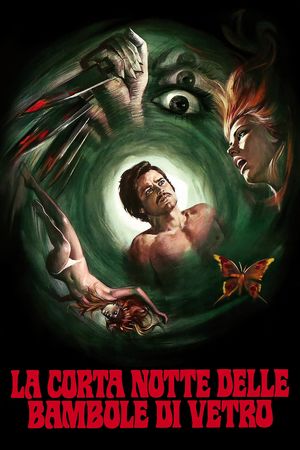
Titre alternatif: Short Night of Glass Dolls, Malastrana, A Breve Noite das Bonecas de Vidro, Je suis vivant!, 黑夜中的玻璃人偶, Kratka noć leptira, Klaasnukkude üürike öö, Verta Venetsiassa, Das Todessyndrom, Gyalines koukles, La corta notte delle farfalle, Catalepsia, Short Night, Короткая ночь стеклянных кукол, La corta noche de la muñeca de cristal, Paralyzed, Unter dem Skalpell des Teufels, Kratka noc leptira
Réalisateur: Aldo Lado
Scénariste: Aldo Lado, Rüdiger von Spies
Production & Genre
Producteur(s): Producer: Enzo Doria
Executive_Producer: Luciano Volpato
Sociétés: Dieter Geissler Filmproduktion, Doria G. Film, Dunhill Cinematografica, Jadran Film
Genre: Horror, Horror Film, Mystery, Thriller
Récompenses & Similaires
Récompenses: N/A
Similaire:
Mots-clés
Mots-clés: disappearance, prague, czech republic, whodunit
Histoire
American journalist, Greg Moore, travels to Prague with his girlfriend Mira. One night, she suddenly disappears. Believing her kidnapped, Greg seeks help from his friend, a local journalist. They discover a pattern of similar disappearances involving young women. Their investigation leads them to an exclusive club where wealthy members engage in bizarre rituals and orgies. Meanwhile, Moore is found unconscious and mistaken for dead by the coroner. Trapped in his paralyzed body, he struggles to recall what happened as his fate hangs in the balance.
Résumé
La corta notte delle bambole di vetro (1971), directed by Aldo Lado, is an Italian-German horror-thriller set against the backdrop of Cold War-era Prague. The film follows Moore's search for his missing girlfriend and his subsequent involvement in uncovering a sinister cult operating within high society. Through its suspenseful narrative and eerie atmosphere, it explores themes of corruption, power dynamics, and moral ambiguity.