


Détails de la scène
| Durée: 148 sec.. | Nudité: yes | Créateur: supers992 |
| Nouvelle taille de fichier: Loading... | Son: yes | Ancienne taille de fichier: 89 mb |
| Format de fichier: AOMedia Video 1 (WebM/AV1) | Résolution: 956x720 | Ajouté: 2026-04-16 |
Voir l'aperçu en taille réelle
Actrices dans cette scène
Détails
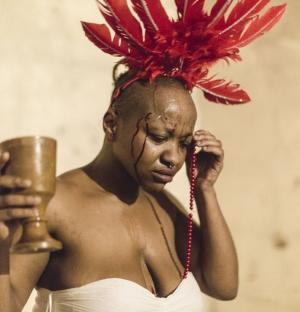
Noms alternatifs: muSa Michelle Mattiuzzi, muSa
Caractéristiques physiques: N/A
Biographie complète
muSa Michelle Mattiuzzi is a contemporary visual artist, performer, writer, and filmmaker born in 1983 in São Paulo, Brazil. Originally known by her birth name Michelle Mattiuzzi, she later adopted the artistic name "muSa" as part of her evolving creative identity.
Based currently in Berlin, her multidisciplinary practice spans performance, photography, and archival research. Mattiuzzi’s work is deeply rooted in the investigation of colonial violence and the subversion of exoticized narratives historically imposed on the Black female body. Her performance pieces, such as the notable O Sangue de Jesus tem Dendê, use the body as a site of political and poetic resistance.
Throughout her career, she has gained international recognition, including being named a Villa Romana Fellow in Florence (2021) and participating in major exhibitions like the 34th São Paulo Biennial. She is also the founder of the platform Rethinking the Aesthetics of the Colony, where she explores Black radical thought and decolonial practices in collaboration with global academic and cultural institutions.
Biographie complète
Paula Carneiro is a Brazilian performance artist and visual investigator whose work is deeply rooted in the artistic scene of Salvador, Bahia. She gained significant recognition for her role as a performer in the 2012 (released 2013) short film O Sangue de Jesus tem Dendê (Jesus' Blood Has Dendê), directed by Daniel Lisboa.
Her artistic practice is characterized by a dense exploration of visuality and the body, often collaborating with other prominent figures in the Brazilian performance art world such as Michele Mattiuzzi and Ricardo Alvarenga. Her work frequently intersects with experimental cinema, particularly the "Desbunde" movement, which focuses on aesthetic iconoclasm and contemporary reinterpretations of the 1970s Super-8 film tradition.
À propos du film: O sangue de Jesus tem Dendê (short) (2013)
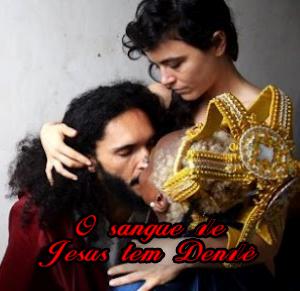
Titre alternatif: O sangue de Jesus tem Dende, The Blood of Jesus Has Dendê
Réalisateur: Daniel Lisboa
Scénariste: Daniel Lisboa
Production & Genre
Producteur(s): N/A
Sociétés: Cavalo Marinho Audiovisual
Genre: Experimental Film, Video Art, Performance Art, Short
Mots-clés
Mots-clés: Afro-Surrealism, Iconoclasm, Palm Oil, Tomada Única, Religious Syncretism, Ritualistic Performance, Bahian Identity
Histoire
The short film is a ritualistic meditation that eschews traditional narrative in favor of a powerful, sensory experience. Filmed in a single, unedited Super-8 shot, the piece centers on a serene and hypnotic performance where the boundaries between the sacred and the profane are blurred. Three performers engage in slow, deliberate movements, creating an atmosphere of quiet intensity and spiritual transformation. At the heart of the film is the symbolic use of Dendê oil—the vibrant red palm oil of Bahia—which serves as a physical surrogate for the 'Blood of Christ.' By drenching religious iconography in this culturally charged substance, the film transforms a well-known evangelical slogan into a poetic celebration of Afro-Brazilian identity. It is less a story of events and more a visual poem about the fusion of European Christianity with the raw, earthy energy of Bahian traditions, ultimately presenting the act of devotion as something deeply rooted in local culture and the physical body.
Résumé
Directed by the Bahian filmmaker Daniel Lisboa in 2013, O Sangue de Jesus Tem Dendê (The Blood of Jesus Has Dendê) is an experimental Brazilian short film produced as part of the 'Tomada Única: Desbunde' project. Shot entirely on Super-8 film in a single, unedited take, the work is a ritualistic and iconoclastic meditation on religious and cultural identity. The title itself is a clever play on the popular evangelical slogan 'The blood of Jesus has power,' replacing 'power' with dendê (red palm oil), a foundational element of Afro-Brazilian cuisine and Candomblé spirituality.
Featuring performances by Paula Carneiro, Ricardo Alvarenga, and Michele Mattiuzzi, the film eschews a traditional plot in favor of a hypnotic visual poem. Through serene, slow-motion movements and a vibrant red color palette provided by the oil, it depicts a spiritual fusion where the Christian sacred is 'baptized' in the earthly essence of Bahia. Produced by Cavalo Marinho Audiovisual for the São Paulo International Short Film Festival, the film serves as a sensory exploration of Afro-surrealism, transforming religious devotion into a physical celebration of local heritage.